Then → Now · 2026
A post written for a niche of freelancers now speaks to about a quarter of all US workdays, which are worked from home.
What it said (2017) ↓
Working from home breeds the "Sweatpants", "Cave(wo)man" and "Housewife/Procrastination" syndromes. Coworking fixes work–life boundaries and isolation.
A café is not a substitute for a coworking space.
What happened (2026) ↓
Home working became mass behaviour, not a freelancer quirk. Full work-from-home days rose from 7% of US paid workdays in 2019 to 26% in 2025 (WFH Research / SWAA).
The pains the post names became the main pitch for flex space. IWG reported in 2023 that suburban, town and rural centres saw some of the largest rises in attendance as people "work locally" (IWG).
Verdict · Held up: 8 / 10 · Full 2026 update
Still valid
Original post · 11 September 2017
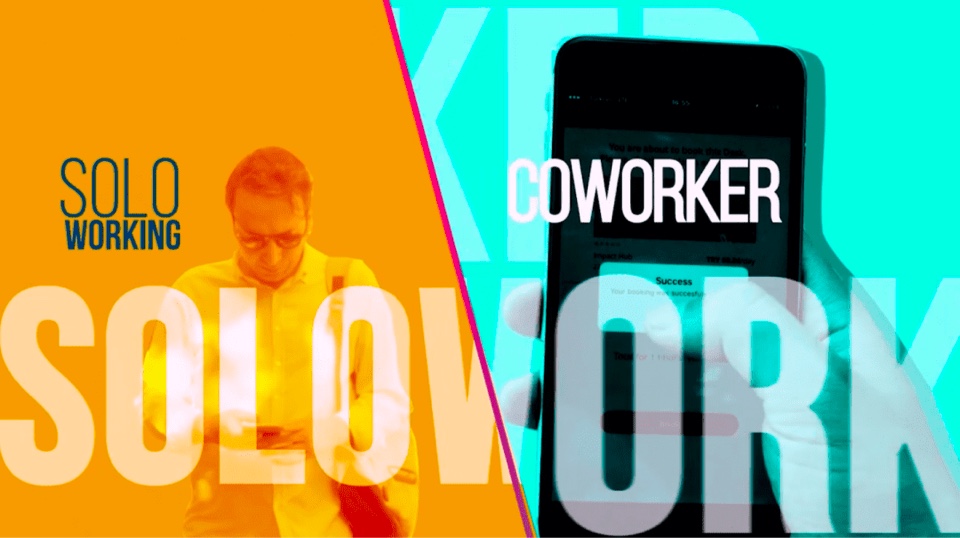
Working-alone vs. Coworking
'Why would you pay to work from somewhere when you can easily find wifi for free in cafes and at home?' It's a fair question, sure, but there are countless valid answers. Here are some of my personal reasons why it makes sense to get a coworking space membership.The Sweatpants Syndrom
You've probably seen the memes; freelancers who have Skype meetings, wearing a nice shirt and a blazer, combined with sweatpants and slippers. I'll admit: I'm guilty. When working from home, it's just so easy to slip into that habit. I wake up, check my email from bed, decide to open my laptop to just quickly reply to one message and before I realize it, it's 10.30am and I've been working for 3 hours. Hungry and with a meeting starting in 30 minutes, I decide to make myself a good breakfast and quickly make my upper half look presentable; who cares about anything outside webcam view? Since I started coworking, I became way better at managing a healthy life/work balance. 7AM email checks are only for emergencies, and sweatpants are exclusively for the gym and an occasional rainy Sunday. Work is done at the flex desk, and personal time is exactly that: personal.The Cave(wo)man Syndrom
Again: guilty. During busy weeks when working from home, it happened far too often that I wouldn't leave my house for a couple of days in a row. After 3 days, I would go insane and crave some social interaction. I believe that if it would have gone on for much longer, I would have gone to the supermarket just to start conversations with random strangers. Thankfully, there's coworking. Even when you're busy and you don't have time for long chats, it's still nice to see familiar faces and to have someone to say hello to at the coffee machine.The Housewife Or Procrastination Syndrom
There's a third issue for me when it comes to working from home: deep down inside, I'm a procrastinator and although I got a lot better, when working from home, the Housewife Syndrom acts up. All of a sudden, I NEED to sort out my wardrobe, clean up the basement and recycle the plastic. Most coworking spaces don't have a basement for me to clean up, so it's a lot easier to focus on work.Cafe vs. Coworking Space
Clearly, working from home doesn't work for me and I know many freelancers and remote workers who feel the same way. So how about working from a café? The wifi is free, you've got your social interactions and it would be frowned upon to do your own dishes. Perfect? Well, this video sums up why a coworking space is still the way to go for me.What happened after this was written
Claims then:
- Working from home breeds the "Sweatpants", "Cave(wo)man" and "Housewife/Procrastination" syndromes. Coworking fixes work–life boundaries and isolation.
- A café is not a substitute for a coworking space.
What happened since:
- Home working became mass behaviour, not a freelancer quirk. Full work-from-home days rose from 7% of US paid workdays in 2019 to 26% in 2025 (WFH Research / SWAA).
- The pains the post names became the main pitch for flex space. IWG reported in 2023 that suburban, town and rural centres saw some of the largest rises in attendance as people "work locally" (IWG).
Verdict: Still valid (evergreen).
Headline finding: A post written for a niche of freelancers now speaks to about a quarter of all US workdays, which are worked from home.
Re-verified 3 November 2026: 2 claims confirmed, 1 corrected, 0 hedged, 0 removed.
Researched 30 September 2026 and re-verified against the sources on 3 November 2026. Sources are linked in each point. Items marked "unverified" could not be established and are not guessed.