Then → Now · 2026
The 2017 hunch about "smaller but more distributed" branches is now IWG's core strategy: in 2025 it opened more locations than it had open after its first fifteen years, mostly in suburbs and towns.
What it said (2017) ↓
Supply "is growing faster than the 'traditional demand'" of freelancers, programmers and small start-up teams, so there will be "more seats and rooms than the current target audience needs".
Spaces will be forced into "customer differentiation", with more spaces "specializing in one or two vertical channels".
What happened (2026) ↓
Supply did outrun the original freelancer demand. The demand that filled the gap came from companies, not verticals.
After the 2020 lockdowns, demand shifted toward private offices: a 76% higher share of requests, contract terms 96% longer, and 26% more seats per request (Coworking Resources, 3 Jul 2020).
Verdict · Held up: 7 / 10 · Full 2026 update
- Coworking supply would grow faster than the traditional demand from freelancers, programmers and small start-up teams.Came true
- Coworking spaces would differentiate by specialising in one or two vertical channels.Partly true because the demand that arrived was corporate and hybrid rather than niche
- Many coworking spaces would open new branches, smaller but more distributed within the city.Came true in suburban and small-town form after 2020
Original post · 28 July 2017
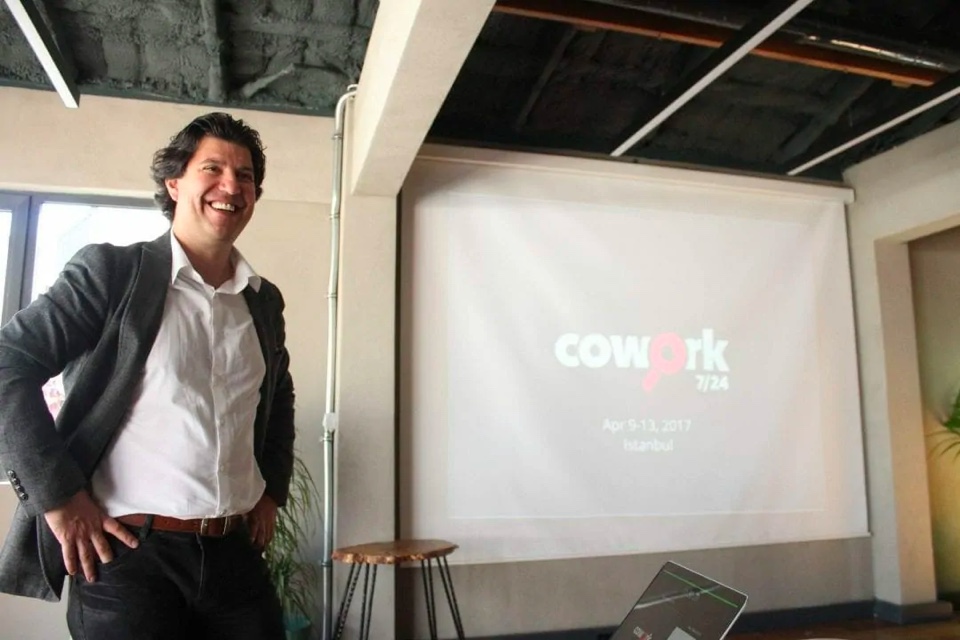
Turning something you’re very passionate about, into a business. Helping the community you feel so close to, as the main reason for your company’s existence. Isn’t that what we all dream of, and what many of us are pursuing? Serkan Kurtulus, founder of Cowork7x24, is doing exactly that. I’ve met only few people who are as excited about an industry as he is, and it’s contagious. So, I asked him all about his journey that led him here, and his vision for the future. Serkan gained most of his experience while working for Procter & Gamble. ‘I’m coming from a corporate life, where I was working location-independent with flexible hours, where flexible hours was driven by my role where I was responsible for a global service, which required me to be available for calls early in the morning with Asia, or late in the evening with LA and the States, for the last 7 or 8 years of my career,’ he starts to tell. ‘It was very inspiring to be able to work for the globe from where I was. I recall having meetings from a hotel room in China at 4:00 am with my colleagues from US, which was sort of the edge. But it was very exciting and inspiring I must say to be able to work from anywhere. Then in the last few years, I started discovering the coworking spaces.’ Soon, he felt at home in the scene and wanted to contribute. ‘Each space had its own identity, community, look and feel,’ he continues. ‘But they all had something in common as well: a coworking culture and etiquette. This is what attracted me and I thought I could be part of this ecosystem by enabling more and more people to find a place they will love working from, while helping coworking spaces to grow their business and the market as a whole.’
And so the idea of Cowork7x24 was born. ‘Our mission is to make the lives of coworking spaces and coworkers easier, by first helping the coworkers find their perfect coworking space to work from. We help them make connections professionally as well as socially and we help them be more flexible in their work. On the other hand, we help coworking spaces grow their business and fill their empty spaces. We make their lives easier by eliminating, or digitizing their unproductive tasks across the board.’
 Being a frequent traveller, Serkan knows from first-hand experience what a relief it can be to find a good coworking space. ‘I used to travel a lot (and I still do!) both for business and pleasure,’ he tells me. ‘I have been used to working at odd hours, from odd places. If you check my Facebook posts, you would find many pictures of me working at nice beaches, from places with great views, sipping a drink, but as many of you also know, we only post the nicest experiences as they serve as a social currency! Most times I was working, I was squeezed in a plane seat, sitting on the floor at an airport, or at crowded coffee shops! So my ideal “working place” is now a coworking space, and I’ve probably been to over a 100 of them and I keep counting. And the ideal coworking space is the one where I can connect with other like-minded coworkers!’
There it is again: the like-minded people, the community. It’s an aspect of coworking that comes back in almost every conversation about the industry. Asking Serkan why he thinks it’s so crucial to the coworking sphere, he answers: ‘While we may enjoy working alone to some extent, we can’t live without socializing with others. In the case of coworkers, community goes beyond the simple need of socializing and is an opportunity to grow personal skills, get things done, establish personal and business networks and in some cases even find the next job or business opportunity. Community is part of a coworking space’s identity. Without the community, a coworking space would just be a nicely designed office-space and furniture.’
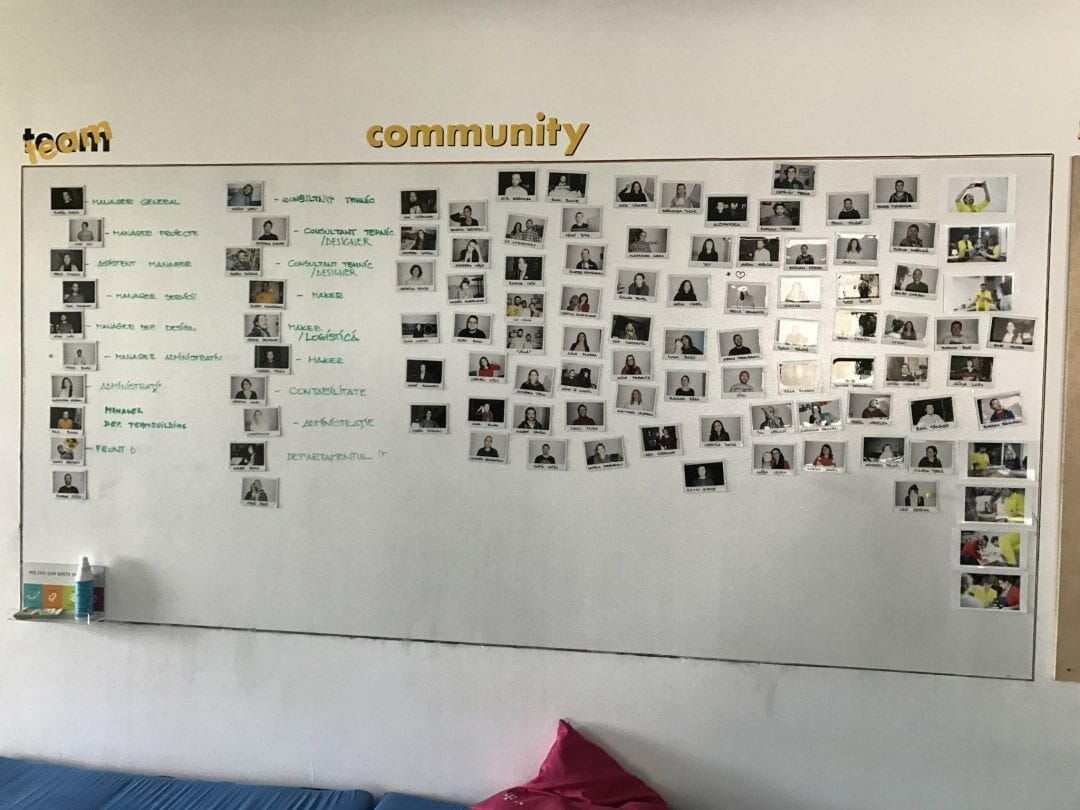 Nowadays it’s not difficult to find a random coworking space. ‘I believe it’s more about finding THE coworking place that suits your needs at a certain time. Maybe you need a space to be close by, or maybe you’re looking for a space that is offering the best value for you at a given day, whether it’s an event or a networking opportunity that attracts you, or a quiet space where you can focus on delivering the last mile of your project.’
For the future, Serkan foresees growth, but also changes in the industry. ‘I think the “supply” is growing faster than the “traditional demand” which usually consisted of freelancers, programmers and small start-up teams, meaning there will be more seats and rooms than the current target audience needs. This will force coworking spaces to create new demand channels by customer differentiation. We will see more coworking spaces specializing in one or two vertical channels, tailoring their spaces to attract more of those professions. The ones who manage to adapt will win and will continue to grow.
The “demand”, on the other hand, requires more flexibility. I am expecting many coworking spaces to open new branches; smaller but more distributed within the city, to cater to the needs of urban coworkers.’
Depending on when exactly you’ll read this article, the Cowork7x24 app has just been released or will be released in the next couple of weeks. Make sure to follow the Facebook group and Instagram to stay up-to-date about the latest Coworking news. Want to meet Serkan and the Cowork7x24 team? We will be in Budapest, Hungary, between August 4 and 9, and will be attending and organizing various coworking events.
What happened after this was written
Claims then:
- Supply "is growing faster than the 'traditional demand'" of freelancers, programmers and small start-up teams, so there will be "more seats and rooms than the current target audience needs".
- Spaces will be forced into "customer differentiation", with more spaces "specializing in one or two vertical channels".
- "Many coworking spaces [will] open new branches; smaller but more distributed within the city".
- The Cowork7x24 app is about to launch.
What happened since:
- Supply did outrun the original freelancer demand. The demand that filled the gap came from companies, not verticals. By 2025, 55% of global corporations were said to use flexible workspace, and 77% of companies ran hybrid models (Allwork.Space, Dec 2025). Freelancers and the self-employed were about 40–42% of users, and employees of established companies about 36% (Deskmag survey data cited by Allwork.Space; the underlying survey dates from around 2017).
- After the 2020 lockdowns, demand shifted toward private offices: a 76% higher share of requests, contract terms 96% longer, and 26% more seats per request (Coworking Resources, 3 Jul 2020).
- The oversupply took its toll. More than 800 North American coworking spaces, 22% of those tracked, closed permanently between 2020 and 2022. 78% of the closures were spaces under 15,000 sq ft (Upsuite, 5 May 2022).
- The "smaller, more distributed" branches came true, but after COVID and mostly in suburbs and small towns rather than across the city. In 2025 IWG signed a record 1,132 new locations and opened 782 centres. Most new sites are in suburbs and rural areas, including small US towns such as Franklin, Texas and Berwyn, Pennsylvania. In June 2023 IWG said demand outside city centres had risen 36% in a year (IWG press release; Zawya, 2026).
- Cowork7x24's own domain did not resolve on 2026-09-30. No current web presence was found. (HTTP check made on that date.)
Named spaces/orgs status:
| Name | Then | Now | Evidence |
|---|---|---|---|
| Cowork7x24 | App launching in 2017 | No current web presence found (domain does not resolve) | HTTP check, 2026-09-30 |
| Procter & Gamble | Author's former employer | Not relevant to verify | — |
Verdict: Supply outgrowing traditional demand: Came true. Vertical specialisation as the answer: Partly true, because the demand that arrived was corporate and hybrid rather than niche. Distributed smaller branches: Came true, in suburban and small-town form after 2020.
Headline finding: The 2017 hunch about "smaller but more distributed" branches is now IWG's core strategy: in 2025 it opened more locations than it had open after its first fifteen years, mostly in suburbs and towns.
Re-verified 3 November 2026: 4 claims confirmed, 4 corrected, 1 hedged, 0 removed.
Researched 30 September 2026 and re-verified against the sources on 3 November 2026. Sources are linked in each point. Items marked "unverified" could not be established and are not guessed.