Then → Now · 2026
"70% of desks are empty 60% of the time" was a 2018 argument for change, yet in October 2026 the average US office week was still only 56% as full as before the pandemic (Kastle 10-city barometer).
What it said (2018) ↓
#1 Wellbeing-led "lively" workplaces (HBR's four needs).
#2 Innovative spaces. JLL: "56%… provides some sort of community spaces, 50% offers spaces dedicated to collaborative working, and 32% has creative spaces."
What happened (2026) ↓
#3 came true, driven by COVID rather than by trend: US: about 25% of paid days are WFH (April 2026), "almost 40 years of pre-pandemic growth" in one jump. SWAA
EU: 5.4% usually worked from home in 2019, 8.9% in 2024 (snippet). Eurostat 2019
Verdict · Held up: 5 / 10 · Full 2026 update
Partly true Five of the seven trends held, several because of COVID. The freelance-80% prediction was the batch's biggest miss.
Original post · 2 October 2018
The Corporate Work Culture is Changing
(you already knew it right?) There is a myriad of trends shaping the way people will work in the corporate world in the future. But what exactly are those trends? What should we keep our eyes open for? And how can we make sure we’re ready for them? What will change in the corporate work culture, and what will not? We’re happy to highlight it all for you.#1 Lively Work Environments
The 21st-century corporate employee has different expectations at work compared to past century workers. A study by Harvard Business Review highlighted that there are four key aspects important to employee satisfaction and productivity at work:- physical - relating to spaces where employees can go to “recharge” when required, such as nap pods and coffee stops;
- emotional - relating to being valued for the contributions they make to the organisation;
- mental – relating to the autonomy given to them so they can decide the most important task to work on, and the best place to work to focus on that task;
- spiritual – relating to the purpose of their work and how that links to their own skills and intrinsic motivation.
 Lively work environment drive employee engagement and motivation
#2 Innovative Work Spaces
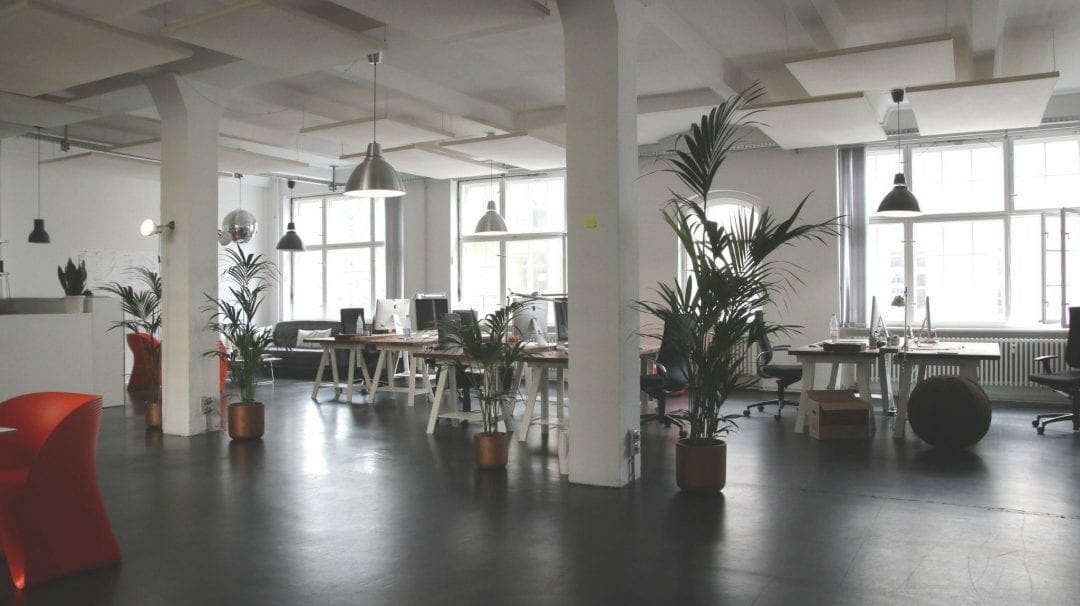
Design has an unquestionable ability to reinforce an emotional, psychological and social setting for creative performance that makes people want to come into work. Since every person is different, companies must appreciate that the ‘Eureka!-moment' might happen during deep-thinking time but also when brainstorming with a diverse group of colleagues. Similarly, while some people like to move freely between different areas to get work done, others tend to gravitate to one spot and stick to familiar habits, according to a study by Leesman. A balanced office environment is key. People need to be able to find different spaces that suit their actual mood, personality, and workload. Workplace design and physical layout need to support people actually getting on with the idea and turn that spark into a real practice – equally support “extended periods of uninterrupted focus” and opportunities for “creative collisions”. A survey conducted by JLL found that 56% of the surveyed companies already provides some sort of community spaces, 50% offers spaces dedicated to collaborative working, and 32% has creative spaces (e.g. design thinking rooms, fablabs) available for their employees.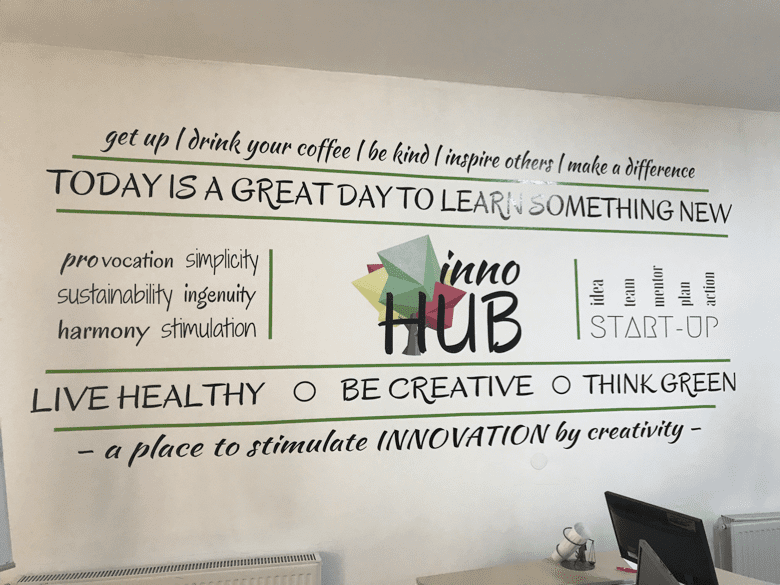 coworking space in Romania
#3 More People Working Outside The Office
Back in the days, from around the 1980s, ”working from home” was the first attempt made by companies to increase employees’ productivity and support greater work-life balance. In this decennium, a study by Cisco highlighted that approximately 69% of its employees surveyed cited higher productivity when working remotely, and 75% of those surveyed said the timeliness of their work improved. A more recent study by JLL found that working from home is still the top alternative workplace preference for 54% of surveyed corporate employees outside their companies’ premises. Besides increased productivity, flexibility in organising workload, a chance to focus without distraction, and no commuting time are mentioned as an advantage of working from home. Freelancer working from outdoor cafe
#4 New Generation in Focus
Even though at the moment there are four generations at work at the same time (Silent Generation or Traditionalists (3%), Baby Boomers (33%), Generation X (32%), Generation Y or Millennials (32%)), millennials will eventually dominate the job market in the near future (with the oldest turning 40 years old in 2020). Corporate organizations must get ready to use the office or work environment as an attraction and retention tool to impress millennials and the coming generations. The number one motivational factor for them is not a high salary but a workplace that is more engaging and collaborative. In fact, according to SIGNAL, 88% of millennials need a workplace that is more engaging and collaborative. Groves and Marlow also add that they look for a workplace that supports a greater sense of freedom and interchangeability.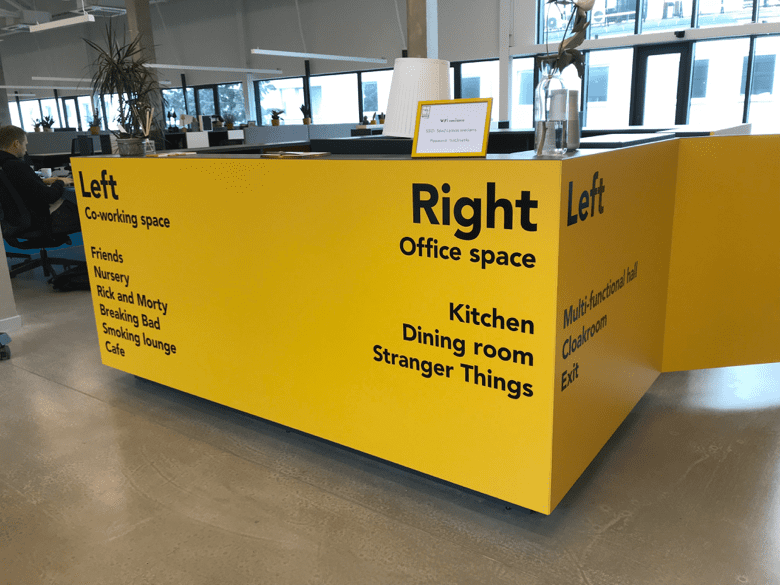 Altspace, a beautifully and functionally designed coworking space in Vilnius, Lithuania
#5 Technology
Even though personal connections still matter, technology has changed the way business is done today. ICT has made aspects of knowledge work more mobile and less geographically dependent. Advanced analytical tools, large data sets and social and mobile computing platforms are already reshaping industries, businesses and consumers’ lives. Workers are not tied to one desk anymore to utilise the technology they need. Instead, they are able to process and transform knowledge either without leaving their homes or indeed from other connected “third places”. At the same time, such work typically and somewhat paradoxically requires enhanced levels of collaboration which is increasingly becoming a common way of doing business across small businesses, within big companies, and between big and small players. Moreover, the rise of corporate employees working from home or other third places implies the need for “virtual workspaces” that help employees being connected and work together with their colleagues. Technology makes it easy to work from anywhere, with anyone from anywhere else
#6 Freelancers – the Workforce of the Future
Considering “small” players, the rise of the “freelance economy” has a significant influence on corporate strategy, operations and hiring practices. Predictions claim that by 2030, 80% of the global workforce will be made up of freelancers. As an outcome, a long-term trend of hiring autonomous and self-directed contract workers continues to accelerate, and more than 80% of large corporations plan to increase their use of a flexible workforce as pointed out by Kursty Groves and Oliver Marlow in their 2016 book. This not only can help them decrease operational costs but can also lower the acceptance barriers for new ideas, and provides opportunities for collaboration and inspiration. by 2030, 80% of the global workforce will be made up of freelancers
#7 Collaboration has become the New Competitive Power
A research conducted by SIGNAL reveals that when people and companies collaborate, they work 15% faster and 75% better on average, and feel 60% more innovative and 56% more satisfied. They use less m2. More precisely, 25m2 can be saved at least. In fact, 17-29% of gross m2 is possible to share if four companies are willing to shift from corporate HQ ownership to multi-let developer rental. On average, 10-20% of office space in cities are empty, and 70% of desks are empty 60% of the time. Now this begs the question: Are rows of empty desks really an efficient use of an office’s space? And, how could this space be utilised for other activities that create organisational value?”. The answer lies in contemporary organisational models such as activity-based clusters in which a company basically uses the whole city as an innovation playground and gets connected to hubs, coworking spaces and networks in order to obtain external knowledge and accelerate innovation practices and outcomes. Today the way we work has fundamentally changed. Work is rather perceived as an activity but not as a single place anymore. To make that activity an enjoyable but also an effective practice, corporates need to understand the trends that are shaping the way we work and live in the 21st century. The evolution of the corporate office, the changing expectations of current corporate workers and the new generation, the rise of freelancers and technological advancement are all part of the constantly shifting nature of “the future of work” corporates need to get prepared for. Coworking Spaces enable collaboration
Do you operate a coworking space ? Sign your space up here
Are you looking for a coworking space to work from ? download our app here for iOS and here for Android.
Do you need more resources for inspiration or building your skills to adapt to the new way of working? Here's few blog posts that you may like:
How To Benefit Most From Coworking
The Way We Work – Past, Present & Future
The Right Time Is Now
What happened after this was written
Claims then:
- #1 Wellbeing-led "lively" workplaces (HBR's four needs).
- #2 Innovative spaces. JLL: "56%… provides some sort of community spaces, 50% offers spaces dedicated to collaborative working, and 32% has creative spaces."
- #3 More people working outside the office. Cisco: "69%… cited higher productivity when working remotely", 75% better timeliness. JLL: WFH is the top alternative for 54%.
- #4 Millennials will dominate, "with the oldest turning 40 years old in 2020". Generational mix: Traditionalists 3%, Boomers 33%, Gen X 32%, Millennials 32%. "88% of millennials need a workplace that is more engaging" (SIGNAL).
- #5 Technology and "virtual workspaces".
- #6 "By 2030, 80% of the global workforce will be made up of freelancers", and "more than 80% of large corporations plan to increase their use of a flexible workforce."
- #7 Collaboration: "15% faster and 75% better." "10-20% of office space in cities are empty, and 70% of desks are empty 60% of the time." The whole city becomes the innovation playground.
What happened since:
-
#3 came true, driven by COVID rather than by trend:
- US: about 25% of paid days are WFH (April 2026), "almost 40 years of pre-pandemic growth" in one jump. SWAA
- EU: 5.4% usually worked from home in 2019, 8.9% in 2024 (snippet). Eurostat 2019
- #4: millennials (born 1981–96) are indeed the core of the workforce. The new focus is Gen Z, 71% of whom prefer hybrid work (Gallup, snippet). CNBC on Gallup
- #5: virtual workspaces became core infrastructure. Salesforce bought Slack for about $27.1B (July 2021). SEC 10-Q
-
#6:
- The 80% figure has no identifiable primary source; it reportedly circulates via a 2017 Medium post, which could not be reopened to confirm its date and wording. Medium/Peerism
- Actual shares: US 38–39% (broad) or 7.4% (BLS); EU 14.2% self-employed. Upwork, BLS, Eurostat
- Whether large corporations raised flexible-workforce use: unverified.
-
#7: empty desks got worse, not better.
- Kastle's 10-city occupancy averaged 56.1% in the week ending 21 October 2026, with Tuesday peaking at 66.1%. Kastle
- Current US office vacancy: unverified this session.
Prediction scorecard:
| Prediction | Then | Now | Verdict | Evidence |
|---|---|---|---|---|
| More people work outside the office | ~5% of EU employed usually WFH (2019) | EU 8.9% (2024); US ~25% of paid days WFH | Came true (because of COVID) | SWAA, Eurostat |
| Millennials dominate; workplaces must court them | 32% of workforce | Core of the workforce; Gen Z now the focus | Came true | CNBC/Gallup |
| Virtual workspaces become essential | — | Slack bought for ~$27.1B; hybrid tooling universal | Came true | SEC |
| 80% of the global workforce freelance by 2030 | — | US 38–39% broad / 7.4% narrow; EU 14.2% | Didn't happen (no path to 80% by 2030) | Upwork, Eurostat |
| Empty desks push firms toward shared, activity-based, city-wide models | "70% of desks empty 60% of the time" | Occupancy averages about 56% of pre-COVID (Oct 2026); hybrid is the norm; city-wide model unproven | Partly true | Kastle, Gallup |
Verdict: Partly true. Five of the seven trends held, several because of COVID. The freelance-80% prediction was the batch's biggest miss.
Headline finding: "70% of desks are empty 60% of the time" was a 2018 argument for change, yet in October 2026 the average US office week was still only 56% as full as before the pandemic (Kastle 10-city barometer).
Additional checks · Chrome search, 30 Sep 2026
- EU usually working from home: 8.9% of EU employed people usually worked from home in 2024 (5.4% in 2019). (confirmed (secondary); Google search in Chrome 2026-09-30; Statista citing Eurostat; Eurostat dataset)
- US office vacancy: 18.3% in Q2 2026 (CBRE), down 30bps, largest quarterly fall since 2015; Colliers 18%. (confirmed; Google search in Chrome 2026-09-30; cbre.com Q2 2026 US Office report; colliers.com)
Where these differ from the notes above, these supersede them.
Re-verified 3 November 2026: 6 claims confirmed, 3 corrected, 1 hedged, 0 removed.
Researched 30 September 2026 and re-verified against the sources on 3 November 2026. Sources are linked in each point. Items marked "unverified" could not be established and are not guessed.